


News
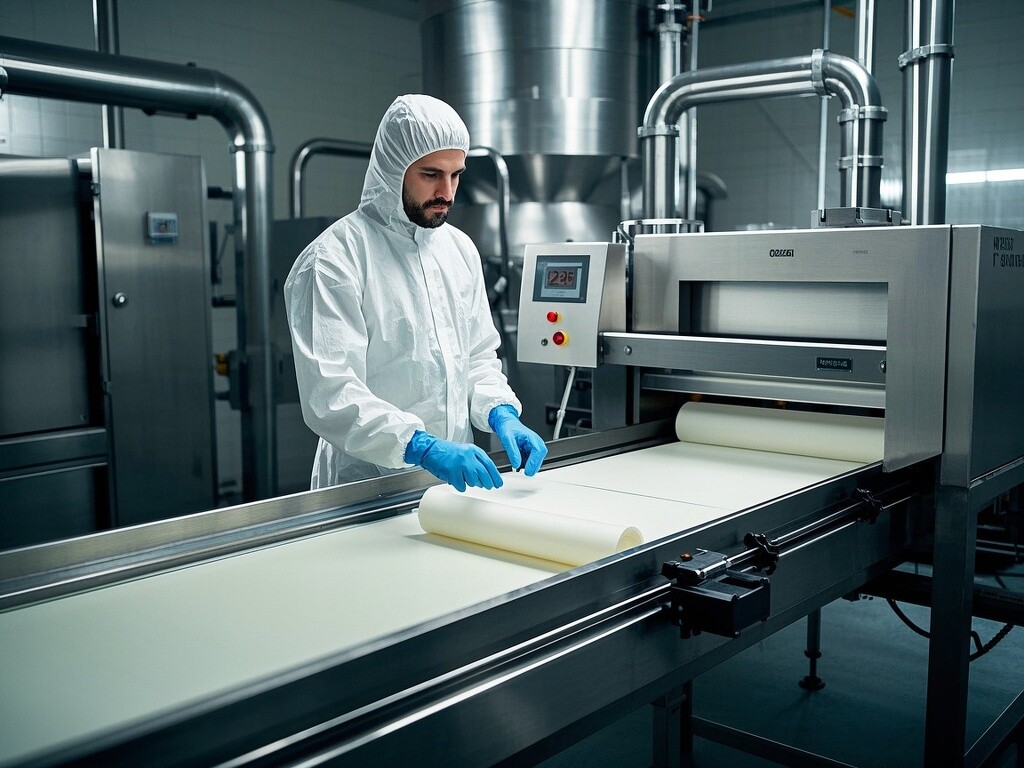
Discover how PTFE-Teflon fabrics are transforming industrial applications with their unparalleled performance. These high-performance industrial composites, including PTFE-Teflon conveyor belts and fabrics, offer exceptional resistance to extreme temperatures and corrosive environments. As superior silicone-coated fabrics and advanced plastic materials, they provide durable solutions for demanding operational conditions. This article explores why technical evaluators and operators increasingly rely on these innovative materials for critical industrial processes.
Understanding PTFE-Teflon Fabrics: Definition and Key Properties
PTFE-Teflon fabrics are engineered industrial textiles coated with Polytetrafluoroethylene (PTFE), a high-performance plastic material renowned for its chemical inertness and thermal stability. These fabrics combine the flexibility of textile substrates with the extreme durability of PTFE, creating versatile composites that withstand temperatures ranging from -200°C to +260°C continuously. The non-stick surface properties make them ideal for applications where material release is critical, while their low coefficient of friction reduces wear in moving parts. Unlike conventional industrial fabrics, PTFE-Teflon materials demonstrate exceptional resistance to UV radiation, ozone degradation, and virtually all industrial chemicals except molten alkaline metals and fluorine compounds at high temperatures.
What sets these materials apart is their unique combination of properties: they are electrically insulating, flame-retardant (meeting UL 94 V-0 standards), and maintain mechanical integrity across extreme temperature fluctuations. The woven fiberglass or polyester base cloth provides tensile strength, while the PTFE coating delivers surface performance characteristics. This dual-layer construction allows manufacturers to tailor material properties by adjusting the base fabric weave density, thread count, and PTFE application methods. For industrial buyers evaluating material specifications, key parameters include thickness (typically 0.08mm to 2.5mm), surface release characteristics (measured by peel force tests), and dimensional stability under load at operational temperatures.
Industrial Applications: Where PTFE-Teflon Fabrics Excel
The unique properties of PTFE-Teflon fabrics have revolutionized multiple industrial sectors by solving persistent material challenges. In food processing and packaging industries, these fabrics serve as non-stick conveyor belts that prevent product adhesion while withstanding frequent high-temperature cleaning cycles up to 150°C. The chemical resistance ensures no contamination risk, complying with FDA 21 CFR 177.1550 and EU 10/2011 food contact regulations. For the aerospace industry, PTFE-coated fiberglass fabrics provide lightweight insulation solutions for wiring harnesses and thermal protection systems, where material failure could have catastrophic consequences.
Industrial drying processes benefit tremendously from PTFE-Teflon fabrics, particularly in paper manufacturing and textile finishing operations. The materials function as breathable dryer fabrics that endure continuous exposure to 220°C heat and aggressive chemical environments while maintaining precise dimensional stability. In plastic extrusion and laminating presses, these fabrics serve as release sheets that withstand pressures exceeding 1000 psi at 200°C without delamination. The chemical processing industry utilizes PTFE-Teflon fabrics for gaskets, expansion joints, and pump diaphragms that resist attack from acids, alkalis, and solvents that would degrade conventional elastomers.
Technical Comparison: PTFE-Teflon vs Alternative Industrial Fabrics
When technical evaluators assess industrial fabrics for critical applications, understanding performance differences between material options is essential. Compared to standard silicone-coated fabrics, PTFE-Teflon materials offer superior non-stick characteristics (lower surface energy of 18 dynes/cm vs silicone's 24 dynes/cm) and broader chemical resistance, particularly against oxidizing agents. While silicone fabrics maintain flexibility at lower temperatures (-80°C vs PTFE's -200°C), PTFE outperforms in continuous high-temperature service (260°C vs 200°C for silicone). The dielectric strength of PTFE-Teflon fabrics (≥20 kV/mm) significantly exceeds that of silicone-coated alternatives (≤15 kV/mm), making them preferable for electrical insulation applications.
Against other high-performance plastic materials like PEEK or UHMWPE, PTFE-Teflon fabrics demonstrate better anti-adhesion properties and lower friction coefficients, though with slightly reduced mechanical strength. The woven fabric construction provides dimensional stability that monolithic polymer sheets cannot match, especially in applications requiring precise alignment or repeated flexing. For thermal insulation applications, PTFE-Teflon fabrics outperform fiberglass alone by eliminating fiber shedding while adding chemical resistance. When cost is considered against performance lifespan, PTFE-Teflon fabrics often prove more economical than alternatives due to their exceptional durability – some industrial conveyor belts last over 10 years in continuous service, far exceeding the 2-3 year lifespan of standard rubber belts in similar conditions.
Selection Guide: Choosing the Right PTFE-Teflon Fabric for Your Application
Selecting the optimal PTFE-Teflon fabric requires careful consideration of operational parameters and performance requirements. For high-speed conveyor applications, a tight weave fiberglass base with 0.1mm PTFE coating provides the best balance of flexibility and durability, while heavy-duty industrial drying applications may require a heavier 0.5mm coating on a coarser weave for extended service life. Technical evaluators should assess the specific chemical environment – while PTFE resists nearly all industrial chemicals, certain fluorinated compounds can cause swelling at elevated temperatures.
Temperature cycling frequency significantly impacts material selection. Applications with rapid thermal cycling (more than 5 cycles per hour between extreme temperatures) benefit from fabrics with special thermal-stabilized coatings that prevent micro-cracking. For electrically sensitive applications, verify the dielectric strength meets or exceeds IEC 60243 standards. Load-bearing applications require evaluation of tensile strength (typically 50-300 N/cm width) and elongation characteristics – some formulations include Kevlar reinforcement for extreme mechanical demands. Always request manufacturer test reports for critical parameters like peel strength (ASTM D903), tear resistance (ASTM D2261), and surface release properties using industry-standard test methods.
Common Misconceptions and Technical Clarifications
Several misconceptions persist about PTFE-Teflon fabrics that can lead to improper material selection. Contrary to some beliefs, not all PTFE coatings are equal – industrial-grade coatings undergo specialized sintering processes that create denser, more durable surfaces than standard non-stick cookware coatings. Another common misunderstanding concerns temperature limits: while PTFE begins decomposing at 260°C, properly engineered industrial fabrics incorporate stabilizers that allow intermittent exposure up to 300°C without significant degradation.
Some operators mistakenly assume PTFE-Teflon fabrics require no maintenance. While these materials are exceptionally durable, regular inspections for surface wear, edge damage, and chemical penetration are essential for critical applications. Debunking another myth, PTFE-Teflon fabrics can indeed be repaired in many cases – specialized heat-sealing techniques can address edge unraveling, and surface scratches can often be re-coated without replacing entire belt sections. Understanding these nuances helps technical teams maximize fabric performance and lifespan while avoiding unnecessary replacements.
Why Choose Our PTFE-Teflon Fabric Solutions?
Our company specializes in manufacturing high-performance PTFE-Teflon fabrics that meet the most demanding industrial requirements. With over 20 years of experience in engineered coatings, we offer technical consultation to match your specific application needs with the optimal material configuration. All our fabrics undergo rigorous quality control testing, including third-party verification of key performance parameters. We maintain complete traceability from raw materials to finished products, ensuring consistent quality batch after batch.
Beyond standard offerings, we provide custom solutions including: hybrid coatings combining PTFE with other high-performance plastics for specialized applications; reinforced edge constructions for conveyor belts; and custom widths up to 4 meters for large-scale industrial equipment. Our technical team can assist with installation guidance, performance troubleshooting, and lifespan optimization recommendations based on thousands of successful industrial implementations worldwide. Contact our materials specialists today to discuss how our PTFE-Teflon fabrics can solve your most challenging industrial material problems while reducing total cost of ownership through extended service life and reduced downtime.
Send Your Inquiry
We welcome your cooperation and we will develop with you.