


News
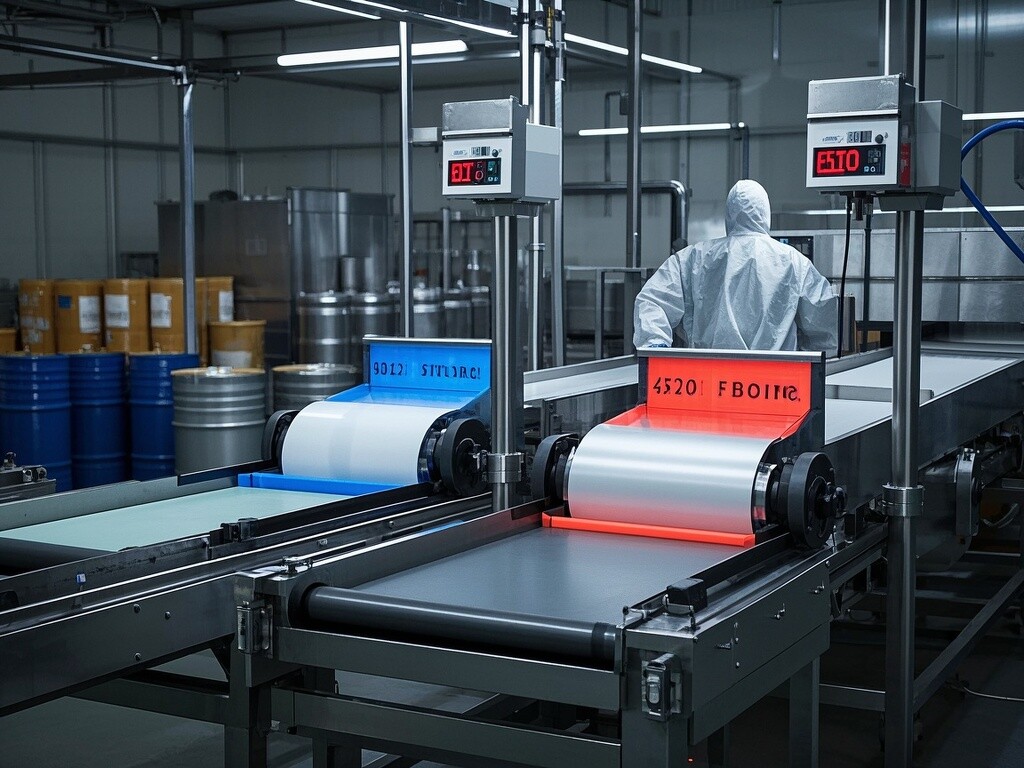
When selecting high-performance industrial composite materials for demanding applications, the choice between PTFE-Teflon fabrics and silicone fabrics is critical. Both PTFE-Teflon conveyor belts and silicone fabrics offer exceptional heat resistance and corrosion protection, but each has unique properties that make them suitable for different industrial environments. This comprehensive comparison will help technical evaluators, operators, and researchers determine which advanced plastic material best meets their specific operational requirements for durability and performance.
1. Definition and Key Properties
PTFE-Teflon Fabrics: PTFE (Polytetrafluoroethylene), commonly known as Teflon, is a synthetic fluoropolymer celebrated for its non-stick properties and exceptional resistance to heat (up to 260°C/500°F) and chemicals. PTFE-Teflon fabrics are engineered by coating fiberglass or other high-strength substrates with PTFE, resulting in a composite material that combines flexibility with extreme durability. These fabrics are widely used in industries requiring high-temperature processing, such as food packaging, automotive, and aerospace, due to their low friction coefficient and anti-adhesive characteristics.
Silicone Fabrics: Silicone-coated fabrics are created by applying a layer of silicone elastomer to a base material like fiberglass or polyester. Silicone fabrics excel in environments demanding flexibility, UV resistance, and moderate heat resistance (typically up to 230°C/450°F). They are particularly favored in applications involving outdoor exposure, such as architectural membranes, protective covers, and marine equipment, thanks to their weather resistance and electrical insulation properties.
2. Comparative Analysis: Performance and Applications
3. Industry-Specific Use Cases
Food Processing: PTFE-Teflon conveyor belts dominate this sector due to their FDA compliance and non-stick surface, preventing food buildup. Silicone fabrics, while food-safe, are less common here but may be used for temporary covers or insulation.
Chemical Manufacturing: PTFE’s near-universal chemical inertness makes it ideal for lining reactors or handling corrosive fluids. Silicone fabrics serve better as protective barriers against spills or as flexible ducting for fume extraction.
Construction and Architecture: Silicone-coated fabrics shine in tensile structures (e.g., stadium roofs) due to their weatherability and aesthetic color options. PTFE fabrics are reserved for high-stress architectural membranes requiring superior tensile strength.
4. Cost Considerations and Lifespan
While PTFE-Teflon fabrics generally command a 20-30% higher upfront cost than silicone counterparts, their extended lifespan in high-temperature environments often justifies the investment. For example, a PTFE conveyor belt in a bakery may last 5-7 years versus 3-5 years for silicone. However, silicone’s lower material cost and easier repairability make it more economical for short-term or flexible applications.
5. Maintenance and Operational Tips
- Cleaning: PTFE fabrics require minimal maintenance—simple wiping suffices. Silicone fabrics may need mild detergents to remove surface contaminants.
- Storage: Store PTFE fabrics flat to prevent creasing; silicone fabrics can be rolled without damage.
- Installation: Use PTFE fabrics with tension control systems to prevent stretching; silicone fabrics allow more installation flexibility.
6. Frequently Asked Questions (FAQ)
Q: Can silicone fabrics replace PTFE in high-temperature applications?
A: Not above 230°C—PTFE remains the gold standard for extreme heat.
Q: Which material has better abrasion resistance?
A: PTFE-coated fabrics typically outperform silicone in high-friction scenarios like conveyor systems.
Q: Are there hybrid options combining both materials?
A: Yes, some manufacturers offer dual-coated fabrics leveraging PTFE’s release properties and silicone’s flexibility for specialized applications.
7. Why Choose Our High-Performance Industrial Composites?
With over 15 years in engineered textiles, we supply ISO 9001-certified PTFE-Teflon and silicone fabrics tailored to your operational thresholds. Our technical team provides:
- Material selection guidance based on ASTM and DIN standards
- Custom fabrication (slitting, splicing, edge sealing)
- On-site performance testing for your specific environment
Contact our engineering specialists today for a free application analysis and sample evaluation.
Send Your Inquiry
We welcome your cooperation and we will develop with you.